 SkinStratos
Fragrance allergens on EU labels: what changed in 2026
Fragrance is one of the most common causes of allergic skin reactions to cosmetics. EU labels now name far more fragrance allergens than before. Here’s what changed and how to use it.
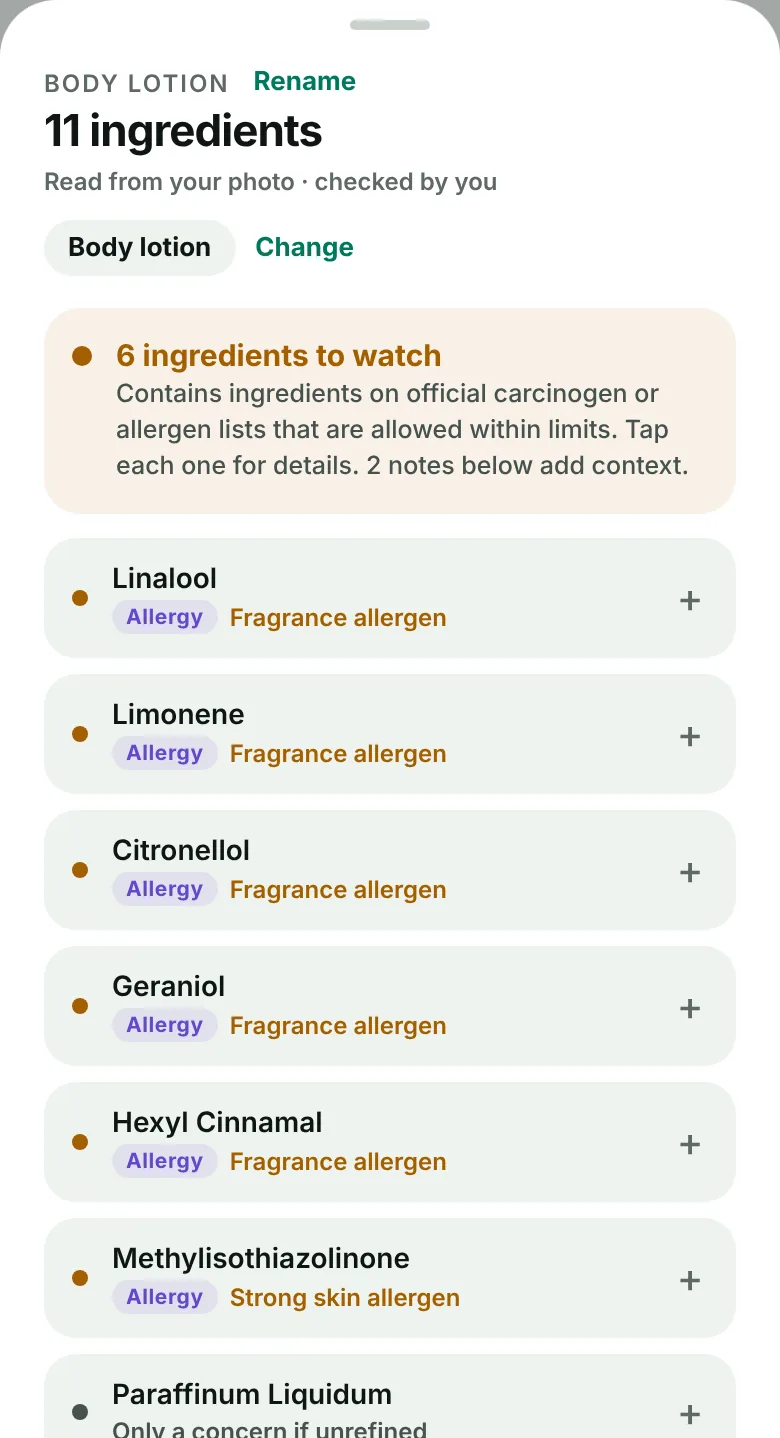
Why some fragrance substances are named
A fragrance blend is listed on the label as “Parfum”, and the brand doesn’t have to reveal what’s in it. The exception is a list of substances known to cause allergic skin reactions. If one of them is present above 0.001% in a product you leave on the skin, or above 0.01% in a product you rinse off, it must be named in the ingredient list.
What changed: from 26 to more than 80
For years, the list held 26 allergens, including names you’ve probably seen at the end of labels: Linalool, Limonene, Citronellol, Geraniol, Coumarin, Eugenol and Benzyl Alcohol. EU Regulation 2023/1545 expanded it to more than 80 entries. New ones include Menthol, Camphor and Vanillin, and essential oils such as lavender, peppermint, eucalyptus and lemon peel oil.
- From 31 July 2026, new products placed on the EU market must name the new allergens.
- Until 31 July 2028, products already on the market can still be sold with old labels.
So for a while, shelves will mix old and new labels. A product with a shorter allergen list isn’t necessarily better for you; it may simply have an older label.
“Natural” doesn’t mean allergen-free
Many allergens occur naturally in plants. Lavender oil contains Linalool, citrus oils contain Limonene, and the new rules name several essential oils directly. A product scented only with essential oils can contain as many allergens as one with a synthetic fragrance.
Some are banned outright
A few fragrance substances are no longer allowed in EU cosmetics at all. HICC (Lyral) was banned because it caused allergies so often. Lilial (Butylphenyl Methylpropional) was banned in 2022 because it may harm fertility. Both can still turn up in products bought before the bans or outside the EU.
If your skin reacts
- Check the end of the ingredient list for the named allergens, and note the ones that keep coming up in products that bother you.
- Before using a new product, try it on a small patch of skin, such as the inside of your elbow, for a couple of days.
- For repeated reactions, ask a dermatologist about patch testing, which can identify the exact substances you react to.
- In SkinStratos, switch on allergy mode to flag every labelled fragrance allergen, plus common preservative and hair-dye allergens, when you scan.
Sources
- EU Regulation 2023/1545 (fragrance allergen labelling)
- CosIng: Annex III (restricted substances)
- EU Cosmetics Regulation 1223/2009, Annex II (prohibited substances)