 SkinStratos
Sunscreen labels and the UV index, explained
SPF, the UVA logo, “very high protection”: sunscreen labels in the EU follow a set of rules. Here’s how to read them, and how they connect to the UV index in your weather app.
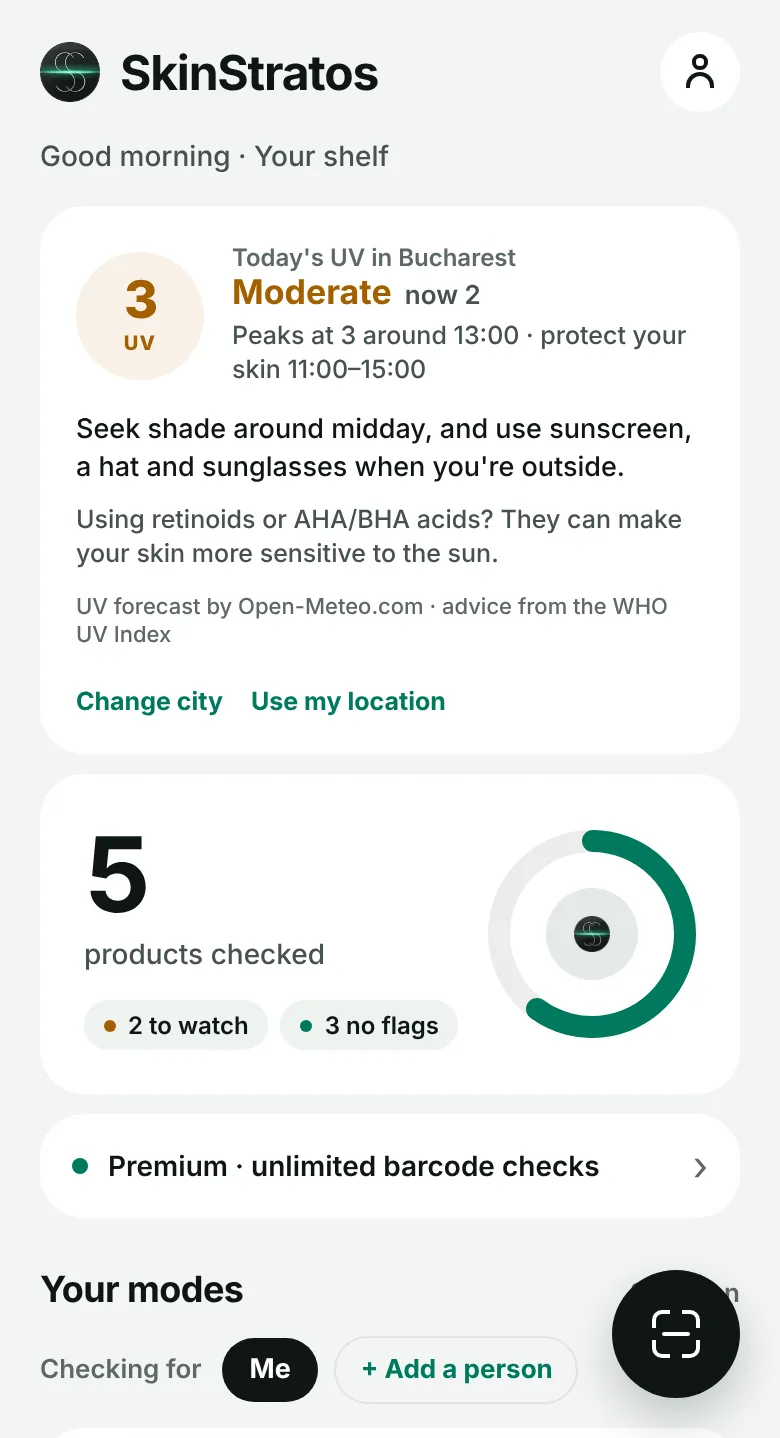
The UV index
The UV index measures how strong the sun’s skin-burning radiation is at a place and time. The World Health Organization groups it into five levels: low (0–2), moderate (3–5), high (6–7), very high (8–10) and extreme (11 and above). From 3 up, the WHO says the risk of skin damage rises and recommends protection: shade around midday, clothing, a hat, sunglasses and sunscreen. Below 3, most people don’t need it.
What SPF means
SPF, the sun protection factor, measures protection against UVB, the rays that cause sunburn. EU labels group SPF into four categories, under a European Commission recommendation from 2006:
- Low: SPF 6 and 10
- Medium: SPF 15, 20 and 25
- High: SPF 30 and 50
- Very high: “50+”, for SPF 60 or more
The SPF number is measured with a generous layer: 2 mg per square centimetre of skin, which the EU puts at about six teaspoons of lotion for an adult’s whole body. Most people apply much less, so they get less protection than the label says. Apply plenty, and reapply after swimming, sweating or towelling.
The UVA logo
UVA rays go deeper into the skin and contribute to skin ageing. The EU recommendation says a sunscreen’s UVA protection should be at least a third of its SPF. Products that meet this usually show “UVA” in a circle, a logo created by the European cosmetics industry association. Look for the SPF you need and that logo.
Claims you shouldn’t see
The same recommendation says sunscreens shouldn’t claim to give complete protection. Words such as “sunblock”, “total protection” or “all-day protection” shouldn’t appear, because no product blocks all UV or lasts all day without reapplying.
When skin is more sensitive to the sun
Some skincare ingredients make skin more sensitive to sunlight, notably retinoids such as retinol, and exfoliating acids such as glycolic acid and salicylic acid. If you use them, sun protection matters more, not less.
In SkinStratos
Switch on the UV index to see today’s UV index for your area on the home screen, with the hours when protection matters most.
Sources
- European Commission Recommendation 2006/647/EC on sunscreen products
- WHO: the ultraviolet (UV) index
- CosIng: Annex VI (UV filters)